5 Surprising Uses for Banana Peels to Boost Your Tomato & Pepper Harvests!
5 Surprising Uses for Banana Peels to Boost Your Tomato & Pepper Harvests
- Introduction
- Using Banana Peels as Fertilizer
- Natural Pest Repellent
- Composting with Banana Peels
- Common Mistakes
- FAQ
Introduction
Picture your garden flourishing, vibrant with ripe tomatoes and peppers, yet you’re faced with the dilemma of finding the right nutrients to enhance their growth. Every gardener understands how important it is to use natural methods to nourish plants effectively. In fact, the solution to boosting your vegetable harvest may be right in your kitchen. Continue reading to discover how banana peels can be an unexpected ally in your gardening journey.
Using Banana Peels as Fertilizer
Banana peels are rich in potassium, phosphorus, and calcium, making them an excellent addition to your gardening regimen.
Benefits of Using Banana Peels
Incorporating banana peels into your soil can:
- Enhance fruit development in tomatoes and peppers.
- Improve soil structure and aeration.
- Encourage beneficial microbial activity in the soil.
How to Use Them
- Chop banana peels into small pieces.
- Mix the pieces into the soil around your plants.
- Water the area to help the peels break down and release nutrients.
Timing and Frequency
Apply banana peels during planting and throughout the growing season every few weeks to ensure a steady supply of nutrients. This will support healthy growth and fruit production in your tomatoes and peppers.
Natural Pest Repellent
Banana peels can also serve as a natural deterrent against certain pests, helping to protect your precious plants.
Pests They Repel
The high levels of certain compounds in banana peels can help repel:
- Gnats that are often attracted to moist soil.
- Aphids, which can wreak havoc on young plants.
How to Utilize Them
- Place whole banana peels around the base of your plants.
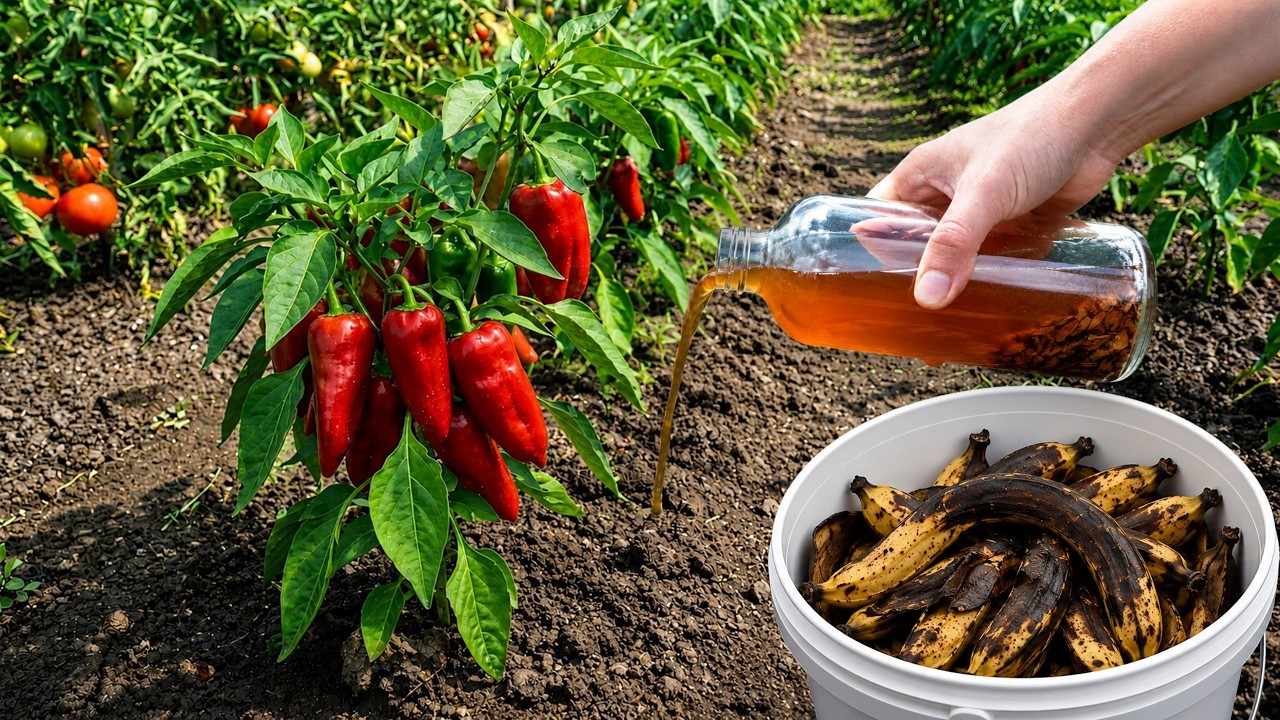
- Consider creating a banana peel tea by soaking peels in water for a few days, then using the liquid to water your plants.
Additional Tips
Ensure that you monitor your plants regularly to identify any pest problems early on. The use of banana peels can be particularly effective when combined with good gardening practices like crop rotation and sanitation.
Composting with Banana Peels
Adding banana peels to your compost heap is a sustainable way to recycle kitchen waste and create nutrient-rich compost for your garden.
How to Compost Banana Peels
- Cut banana peels into smaller pieces to speed up decomposition.
- Mix them with other green materials such as vegetable scraps and brown materials like dried leaves or shredded paper.
- Turn the compost pile regularly to aerate it, ensuring even decomposition.
Benefits of Composting
Composting banana peels not only helps reduce waste but also contributes to:
- Enhancing soil fertility over time.
- Improving moisture retention in soil.
Common Mistakes
While using banana peels in the garden can be beneficial, it’s important to avoid some common missteps.
Specific Mistakes to Avoid
- Using too many banana peels at once can create an imbalance in your compost.
- Failing to chop the peels can slow down their effectiveness as a fertilizer.
- Ignoring signs of pest infestations because you rely solely on banana peels for pest control.
FAQ
Can banana peels attract pests? Yes, if left in large quantities, banana peels can attract pests rather than deter them. Always monitor for insects.
Do I need to dry banana peels before composting? No, fresh banana peels can be composted directly. However, drying them beforehand can speed up the process.
How long does it take for banana peels to decompose? In a composting system, banana peels typically take about 2 to 4 weeks to break down completely.
Conclusion
By utilizing banana peels as fertilizers, natural pest repellents, or compost materials, you can significantly enhance your tomato and pepper harvests. Have you tried using banana peels in your garden? Share your experiences in the comments!