5 Tips for Rapidly Accelerating Your Leaf Mold Pile
5 Tips for Rapidly Accelerating Your Leaf Mold Pile
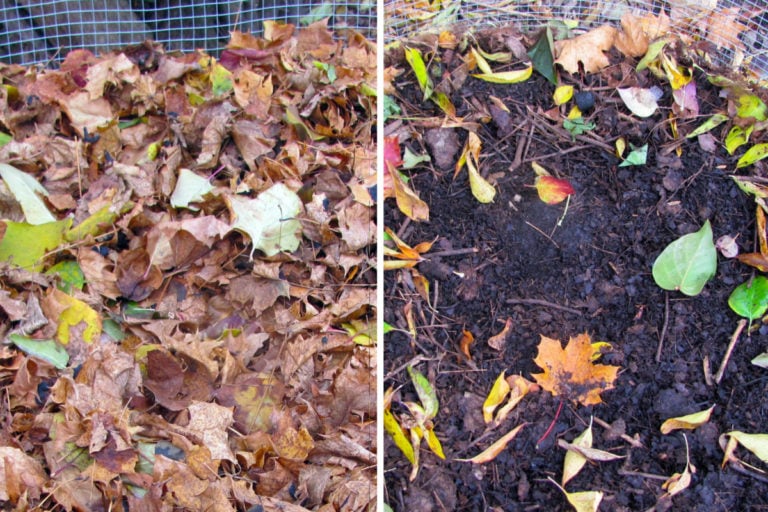
The journey from vibrant autumn leaves to rich, dark leaf mold typically takes time. While you can simply pile leaves and wait 2 to 3 years for them to decompose, a little extra effort can reduce this process to just one year. Here are five effective tips to kickstart your leaf mold pile and transform your garden waste into a valuable resource.
1. Build a Leaf Bin
Creating a dedicated leaf bin is the first step to achieving excellent leaf mold. A bin keeps your leaves in one place and prevents them from blowing away while providing a clear area for next autumn’s harvest.
- Maintains structure for efficient decomposition
- Encourages larger pile volume for faster results
For a simple DIY bin, use a 10-foot length of hardware cloth, 36 inches wide. Roll it into a cylinder, secure the ends, and push it into the ground, creating a roughly 3’ x 3’ x 3’ area. This quick project takes about 10 minutes!
If you’re looking for something more permanent, consider wooden pallets, wattle fencing, loose bricks, or any suitable materials you have on hand.
2. Position Your Leaf Bin Near Trees
The microorganisms involved in breaking down compost differ from those that decompose leaf mold. Compost relies on bacteria and thrives in warmer conditions, while leaf mold is primarily facilitated by fungi that prefer cooler temperatures.
Place your leaf bin in a shaded area—ideally under trees—to maintain a cooler environment and promote fungal growth. The natural habitat will encourage existing fungal colonies to flourish in your leaf mold pile.
3. Shred the Leaves
One of the most effective strategies to accelerate leaf decomposition is shredding your leaves before stacking them. Smaller pieces increase surface area for fungi, molds, and other organisms to process the material.
- Use a leaf mulcher to quickly collect and shred leaves.
- Alternatively, an electric leaf shredder or a lawnmower with a bag attachment works well.
- If machinery isn’t available, you can crush leaves by foot once bagged.
For the best results, shred leaves when they are dry and brittle, avoiding clumping. Fill your bin to the top, and as leaves settle, top it off with more shredded material.
4. Water the Leaf Pile Thoroughly
As you continue to add leaves, periodically water the pile to ensure even moisture distribution. For every 6 to 12 inches of fresh leaves, soak the pile thoroughly.
The ideal consistency is moist but not dripping wet. Once the pile is filled, let the rain manage the moisture, but check regularly, especially during dry spells.
5. Turn the Leaf Pile Occasionally
Over the coming months, your leaf mold pile will shrink and transform. To enhance decomposition, consider turning the pile occasionally. This introduces oxygen and promotes a more uniform consistency.
- More frequent turning enhances airflow for fungi and earthworms.
- Allows semi-rotted leaves to break down further.
While the frequency of turning is up to you, remember that the more you aerate, the better the outcome will be in creating rich leaf mold.
Conclusion
By following these five tips, you can significantly accelerate the process of creating leaf mold in your garden. A well-organized leaf pile not only saves time but also transforms fallen leaves into a valuable resource for your garden. Embrace these practices this autumn, and enjoy the rewards of your efforts next year!